

In hospitality, guest experiences rise or fall depending on the quality and confidence of people at the frontline. This is why hospitality onboarding has become a board level concern rather than a paperwork exercise, particularly as operators work through sustained volatility in demand, rising labour costs and complex regulatory expectations that touch everything from right to work to the fair allocation of tips. Recent labour market snapshots underline the challenge and opportunity in the sector, with vacancies in accommodation and food services still material in scale and trending with wider headwinds, which places a premium on getting new joiners productive swiftly while keeping compliance watertight.
At the same time, the regulatory context that shapes pre-employment screening and pay has evolved, making robust onboarding processes non-negotiable for multi-site brands. Employers must evidence compliant right to work checks using the prescribed routes, whether manual, online or via certified digital identity service providers for eligible British and Irish citizens, with civil penalties for illegal working now substantially higher, and guidance updated through 2024 and 2025 to reflect digital status and identity frameworks. Operators also need to ensure their onboarding flow accounts for new tipping rules and tronc governance, since the Employment Allocation of Tips regime and HMRC guidance now require transparent distribution, written policies and accurate payroll treatment that can stand up to scrutiny.
The commercial imperative is equally clear, because slow time-to-proficiency keeps teams in training mode and managers firefighting, whereas thoughtful onboarding reduces ramp time, stabilises teams and supports consistent service. Research across frontline heavy sectors shows productivity leaders combine investment in people with fit-for-purpose technology and data, which reinforces the case for integrated onboarding that links HR, workforce management and pay from the outset. When onboarding falls short, the effects show up quickly in engagement and retention metrics, and research continues to find that many new starters view their early experience as fragmented or underwhelming, which is exactly where structured, transparent and well communicated onboarding can move the dial.
What hospitality onboarding must deliver for large organisations
At enterprise scale, hospitality onboarding has to do more than issue logins and uniforms, since the outcomes that matter are timebound and measurable. It should accelerate time-to-productivity for variable hours teams by combining preboarding content, role specific capability building and early rota visibility that reduces anxiety about shifts and earnings. It must also embed compliance by design, with right to work, visa tracking, Working Time Directive checks and National Minimum Wage safeguards built into the flow, rather than added as after the fact controls that create delay. Finally, it has to be consistent across hotels, restaurants and venues while allowing for local realities, which means standardising core steps and content, and flexing only where regulation, brand or role legitimately differ.
Forward looking hospitality leaders are also reframing onboarding as the first step in a continuous performance journey, which aligns with emerging perspectives in travel, hospitality and services that advocate moving beyond narrow output measures to human-centred indicators such as guest satisfaction, confidence and retention, supported by modern learning and analytics.
Designing an onboarding process for high volume hiring
Large operators hire in waves to open new sites, cover peak seasons and backfill attrition, and the onboarding process must keep pace without sacrificing accuracy. Digital identity checks are a pragmatic starting point where eligible, certified identity service providers for British and Irish passports enables faster verification while preserving the employer’s statutory excuse when carried out correctly, although organisations remain accountable for outcomes and recordkeeping.
Next comes automation of tasking, document capture and cross functional orchestration, because coordinated workflows across HR, operations, IT and payroll prevent bottlenecks and rework. Right to work checks, online share codes and follow ups for time limited permissions should be sequenced early, with clear audit trails that align to the latest Home Office guidance, including the shift to digital statuses for many cohorts and the phasing out of physical BRP evidence. It is equally important to design onboarding with pay and scheduling in mind from day one, since the combination of variable hours, premiums, tronc distributions and overtime means that accurate time data and correct classification are essential for National Minimum Wage compliance and for protecting colleagues’ earnings.
Finally, consider the human experience alongside the process mechanics, because early engagement has direct links to retention and wellbeing. Investing in clear roadmaps, buddying and manager check ins, supported by bite sized capability building, resonates strongly in frontline environments, where people want to feel informed and confident as they start to serve guests.
Creating consistent experiences across locations
Consistency does not require uniformity for its own sake; it requires a standard framework that protects the brand, upholds legal obligations and ensures a new starter in Glasgow receives the same quality of welcome as a colleague in Plymouth, even if their roles and local schedules differ. Practical enablers include template workflows for right to work, health and safety, food hygiene and mandatory learning that are auto assigned by role and site, with controls that block roster assignment until critical steps are verified, plus centralised content that is updated once and cascaded everywhere so nothing is missed when regulations change.
Equally, rota visibility matters far earlier than many operators assume, because early access to schedules and the ability to swap shifts within policy fosters trust and reduces queries, which in turn lowers manager admin during the very period when they are onboarding the next cohort. Brands that have achieved multi-week rota visibility at scale report measurable gains in manager capacity and colleague confidence, illustrating how workforce and onboarding decisions are tightly interlinked.
How Zellis supports hospitality onboarding at scale
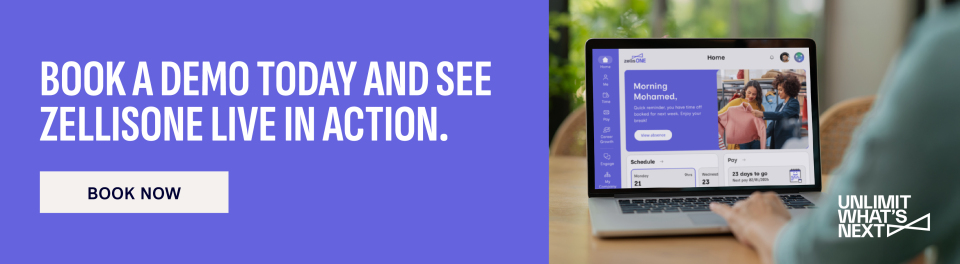
Zellis brings HR, Workforce Management and Pay into a single, AI-enabled experience that is built for high volume, multi-site hospitality, so HR teams and site managers can move smoothly from offer to first shift without losing control of compliance or colleague experience. Within the ZellisONE platform, onboarding workflows orchestrate tasks across teams, capture documents, accelerate UK right to work checks and surface prompts for managers, with data flowing through to scheduling and pay so that new starters can be rostered and paid correctly from day one.
For hospitality specific needs, Zellis supports full-time, part-time and seasonal contracts, pooled tips and tronc schemes, variable hours and visa tracking, together with National Minimum Wage alerts and integrated training management, which helps operators uphold obligations while reducing manual reconciliation across HR, rotas and payroll. The same platform strengthens demand forecasting and intelligent scheduling, enables colleague self service for payslips and rotas, and automates compliance workflows so managers can focus on guests rather than paperwork.
See how HR processes are now simple, efficient and all under one roof for Five Guys UK
The future of hospitality onboarding
Onboarding in hospitality is shifting from a linear checklist to an intelligent, data driven experience that adapts to context and role, which is why AI-enabled automation and predictive insights are becoming central to how operators welcome, train and schedule new colleagues, and why integrated platforms that join HR, WFM and Pay are now foundational. ZellisONE brings this to life by combining AI across modules with real time workforce data, enabling faster hiring, earlier productivity and more confident decision making for HR and operations leaders who need to balance cost, service and compliance every week of the year.