








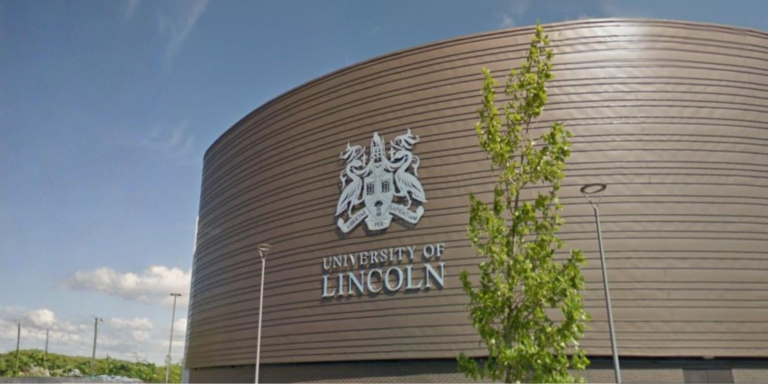
Over the past twenty years, the University of Lincoln (UoL) has evolved into a modern, internationally recognised institution, now home to more than 17,500 students studying across more than 300 courses.
The university’s commitment to delivering consistently outstanding standards of teaching, learning and outcomes for students hasn’t gone unnoticed. It achieved the highest rating in the Teaching Excellence Framework (a national scheme run by the Office for Students) and has been awarded the Queen’s Anniversary Prize – the UK’s highest honour for universities, in recognition of its work supporting the agri-food sector.
Keeping an organisation of this size and complexity running is no small task. The university employs over 1,900 staff, along with more than 1,300 casual and student workers – all of which must be paid accurately and on time. Responsibility for this sits with a small but highly experienced team within the University’s Department of People, Performance and Culture. Claire Kennedy, Head of Reward and Remuneration, oversees payroll, pensions, systems and data, including the management of ten payrolls – six monthly and four weekly. Alongside her, Rick Battenbough, Head of People Systems and Data, leads on technology. Between them, they bring deep institutional knowledge and long-standing experience of the university’s payroll environment – expertise that has been central to its transformation journey.
“We’re the last two remaining super users from the original implementation team,” Rick says. “We’ve seen every version of this system evolve over time, so we understand both what it can do, and where the pressure points are.”
When an on-premises implementation slows success
UoL has been a customer of Zellis (and its predecessor systems) since 2001 – a partnership spanning 25 years. In 2014, the university migrated to ResourceLink, but ran the software on-premises, meaning technology infrastructure ownership sat internally. While this worked, it came at a cost, particularly when it came to managing software updates – a process that was both disruptive and unpredictable.
Rick recalls one particularly difficult period that came with managing an in-house system. Every security patch required testing across both staging and live environments. On top of this, every issue raised with support involved extracting and sending large log files – often already out of date by the time they were reviewed. He explains. “When you’re running weekly payrolls, you don’t have that kind of time to lose – the knock-on effects are immediate.”
This wasn’t the only operational burden.
“We had a payroll problem once and ended up on a Teams call until eight o’clock at night, relying on our own IT colleagues being available out of hours,” Claire says. “By the time the call was updated, the logs were out of date. We ended up going round in a circle.”
Processing constraints added further pressure. Large payroll runs had to be scheduled overnight, when system usage was low. Reporting was largely manual, with hours spent each day running, saving and distributing outputs. Even short periods of downtime created backlogs, particularly with a high volume of transactions through MyView.
The moment of change
It became increasingly clear that, while the Zellis system was stable, the way UoL was hosting it was becoming a limitation. So Claire and Rick began evaluating their options, with clear end goals: continuity of experience, reduced operational overhead and the ability to move beyond batch-based processing.
Zellis HCM AIR was a logical choice. “We’d already built years of configuration and automation into the Zellis system,” Claire says. “Could another supplier have replicated what we had developed over the years with process improvements without losing the functionality? Probably not. Having continuity was really important to us. But, ultimately, the possibility of having real-time payroll and the enhancements through HCM was a game changer for us.”
Implementing Zellis HCM AIR required a degree of cultural change. Payroll teams are highly process-driven and risk-aware. Moving to a cloud-based, real-time model demanded a new level of trust.
“People working in payroll like routine and control,” Claire says. “Moving to Zellis HCM AIR meant we had to let go of that a little bit and trust the system. But being part of the implementation helped us understand what was happening.”
UoL went live directly into a weekly payroll run – and within weeks was managing a backdated pay award, an early pay date, multiple upgrades and its first cloud-hosted year-end.
A rapid return on investment
The impact of moving to Zellis HCM AIR was immediate. Payroll calculations that previously required overnight batch processing now run in about three minutes for roughly 3,000 records. At the same time, reporting – which used to be a manual process – has now been automated, saving around ten hours per week.
Upgrades that once meant at least a full day of downtime now happen overnight, in under 30 minutes. Staff log off in the evening, the upgrade runs, and they return the next morning to a fully updated system – with no disruption to processing.
Support has been transformed too. Zellis can now access UoL’s environment directly, without the need for log files or lengthy back-and-forth. “I had a year-end issue last week,” says Claire. “I raised it, somebody was in the system straight away, and it was fixed within half a day. On-premise, we wouldn’t have been able to resolve it in that timeframe at all.”
Microsoft security patching, once a time-consuming obligation, is now handled automatically by Zellis. Meanwhile, single sign-on has eliminated password-related helpdesk calls entirely.
That’s not all. Year-end processes, which once took nearly a week, are now completed within half a day thanks to automatic statutory parameter updates during the upgrade cycle and separate tax calendars for each payroll.
In short, the move to real-time payroll has fundamentally changed how payroll is experienced. “We’re running payrolls much more quickly, but more importantly, the processing window is open for so much longer,” Claire says. “We’re capturing late starters properly, we’re not scrambling to fix issues after the fact, and we’re not having to raise emergency payments because something’s been missed. The pressure hasn’t just reduced – it’s changed shape entirely.”
Visibility has also improved significantly. Real-time dashboards show exactly where each payroll sits at any given moment, while prioritised focus lists ensure nothing is overlooked.
“Before, I’d have to ask the team where they were up to,” Claire says. “Now I can see everything instantly. It sounds simple, but it makes a huge difference.”
Building a stronger foundation
With the core platform stable and the team confident in its new way of working, attention has now turned to what comes next.
“The first phase was about going live and proving the model works – and it does,” Claire says. “Now we’re in a position where we can step back and ask what we actually want to do differently. What can we automate? What can we simplify? What can we stop doing altogether?”
UoL’s key priorities include enhancing self-service through intelligent payslips, digitising processes such as P45 distribution, and using Zellis automation tools to proactively manage events like probation end dates and fixed term contract expiry dates.
There is also a longer-term goal to consolidate weekly payrolls into a single monthly cycle, unlocking further efficiency for a small team with a broad remit.
A transformation worth reflecting on
Looking back, the scale of change is significant – not just in terms of technology, but in how payroll operates as a function within the university.
For Claire, the impact is both practical and cultural: “It’s been a massive difference, and I think sometimes you don’t stop to recognise that when you’re in the middle of it,” she says. “This has been a real step forward for us – not just in how the system performs, but in how the team works day to day. We’ve moved from managing constraints to actually having the space to improve things, and that’s a very different, positive and exciting place to be.”
Since implementing Zellis HCM AIR, UoL has:
- Reduced year-end processing time from nearly a week to half a day
- Cut payroll calculation time to around three minutes for 3,000 records
- Eliminated overnight batch processing
- Saved approximately 10 hours per week through automated reporting
- Eliminated password-related helpdesk queries
- Improved issue resolution times from days to hours
- Removed the burden of manual Microsoft security patching and infrastructure maintenance
- Extended payroll processing windows, enabling more accurate capture of late starters and changes
- Gained real-time visibility across all ten payrolls
- Enabled greater self-sufficiency through improved knowledge base resources
Key features of Zellis HCM AIR:
- Cloud-native infrastructure
Reduced operational burden, increased security and scalability.
- Real-time payroll processing
Payroll is continuously updated, removing the need for traditional batch-based processing cycles.
- Automated system updates and statutory compliance
Regular platform updates, including statutory and regulatory changes, are delivered centrally as part of the cloud service.
- Realtime payroll dashboards
Live visibility of payroll processing status and data across the payroll cycle.
- Anomaly detection and exception reporting
Payroll data issues (such as duplicates or inconsistencies) are automatically flagged.
- Intelligent payslips
Enhanced digital payslips provide contextual explanations of pay, improving employee understanding.
- Embedded analytics and reporting tools
Built-in analytics capabilities enable fast and accurate insight generation.
- Single Sign-On (SSO) support
Users access the platform securely using organisation identity credentials, reducing the need for separate login credentials.